

 CN
CN

 Back
Back 

Case Analysis: On-site at a Jiangsu Tank Farm — Application of Shengke 80GHz Radar Level Sensors on Small Alcohol Storage Tanks.
Inside the tank farm at a Jiangsu drying tech facility, a series of 1-meter dish-bottom tanks are currently in full operation. These tanks store both pure isopropanol and various isopropanol-based solvent mixtures.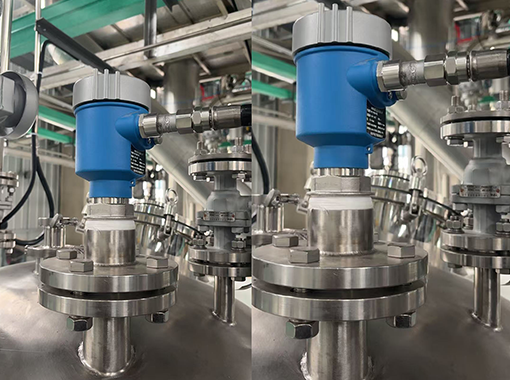
As these substances are vital to the drying process, pinpoint accuracy in level measurement is a must. Even slight errors can disrupt batching precision, cause costly material waste, or create potential safety hazards.
Our SK-R800N® 80GHz high-frequency radar level sensors were deployed with customized flanges across the facility's tank farm. After professional calibration and commissioning by our technical team, the system is now operating smoothly. The transmitters have demonstrated exceptional stability, providing the precise and dependable data essential for our client's operations.
Shengke Solutions: Technical Advantages of the SK-R800N®
The Shengke technical team selected the SK-R800N® 80GHz Millimeter-Wave Radar Level Gauge for this project. Thanks to its unique technical characteristics, this instrument perfectly aligns with the demanding on-site requirements: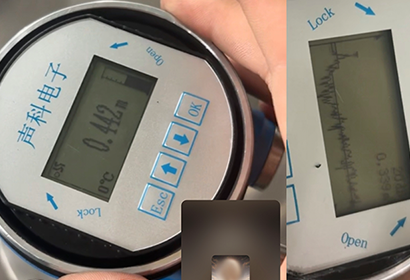
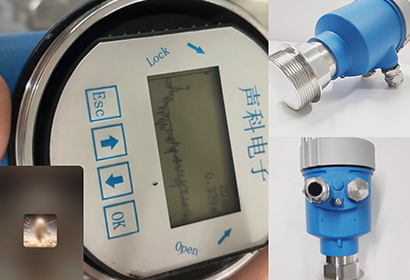
Ultra-Small Blind Zone for Precise Coverage: Leveraging 80GHz high-frequency technology, the SK-R800N® features a minimal blind zone. This makes it ideal for small-scale tanks (approximately 1 meter in height), providing stable and reliable data even when the liquid level is near the top or approaching the bottom of the tank.
Narrow Beam Angle to Eliminate Interference: This model boasts an extremely narrow beam angle, allowing for highly concentrated energy emission. In di
sh-bottom storage tanks, the narrow beam effectively avoids interference from tank walls and focuses directly on the liquid surface, significantly enhancing the Signal-to-Noise Ratio (SNR).
Optimized Algorithms for Stable Performance: To account for the volatile nature of alcohol-based solvents, the SK-R800N® features integrated, advanced signal processing algorithms. It automatically identifies and filters out "clutter" or noise caused by agitation or evaporation, ensuring a smooth, accurate, and consistent output.

