

 CN
CN

 Back
Back 

Biomass Power Plant Straw Ash Silo Level Monitoring: Shengke Electronics SK-R800 Radar Level Sensor Case Study
Project Background
The Zhaodong Branch of a clean energy Co., Ltd. is a biomass power generation enterprise that generates electricity through direct combustion of agricultural and forestry waste such as straw. The straw ash produced after combustion needs to be collected and temporarily stored in ash silos before being transported out for disposal on a regular basis. Inaccurate level monitoring in the ash silo can easily disrupt the ash discharge rhythm — excessive accumulation risks silo overflow, while premature emptying causes waste of transportation resources, ultimately affecting the continuous and stable operation of the power generation unit.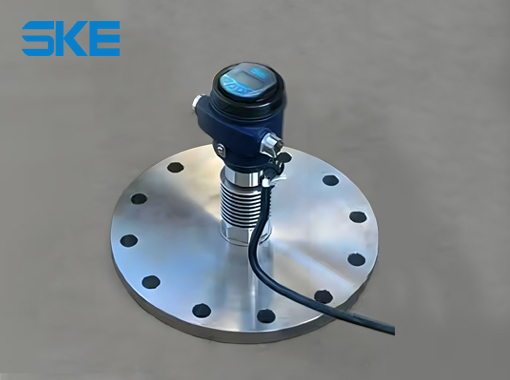
Measurement Challenges
Measuring straw ash presents several difficulties:
Straw ash is a low-dielectric-constant powder with fine particles and uneven density. During unloading and ash conveying, heavy dust is generated, and the material pile angle inside the silo is irregular, which significantly interferes with measurement signal stability.
The temperature inside the ash silo remains consistently between 150–200°C year-round, placing high demands on the instrument's temperature resistance, sealing structure, and stability of electronic components. Conventional instruments often cannot meet these temperature requirements.
Previously, the site had considered ultrasonic level sensors. However, ultrasonic measurement relies on sound wave propagation and reflection through air. In dusty environments with stratified high-temperature gases, sound waves are prone to attenuation or false echoes, resulting in fluctuating or even invalid measurement data. This makes ultrasonic technology less suitable for high-temperature, high-dust conditions.
Selection Technical Requirements
Based on the site conditions and integration requirements with the control system, the following technical parameters were specified:
Output signal: 4-20mA, supporting HART protocol for integration with DCS/control systems
Process connection: DN200 flange, PN16 pressure rating
Material: 304 stainless steel, to meet corrosion protection needs in the dusty ash silo environment
Temperature resistance: Must reliably operate in 150–200°C conditions
Technology Comparison
Ultrasonic and radar measurement principles show clear differences in performance under these working conditions.
Ultrasonic meters rely on sound wave propagation and are susceptible to signal attenuation and false echoes in dusty environments. Most models have limited temperature ratings, with restricted performance of electronic components and probes under high temperatures. Probes are also prone to dust buildup, requiring regular cleaning.
Radar sensors rely on electromagnetic wave propagation and do not depend on air as a transmission medium, offering stronger dust penetration capability. The SK-R800 solid material dedicated series is designed with a temperature range covering 150–200°C and above. It supports 4-20mA output and HART communication, and its anti-adhesion structure helps reduce maintenance frequency.
Solution
Shengke Electronics'SK-R800 solid material dedicated radar level sensor has been specially optimized for low-dielectric-constant, dusty solid powder applications. Its antenna design is adapted to the reflection characteristics of media such as straw ash, ensuring strong signal strength while reducing interference in dusty environments.
From a parameter matching perspective, the 4-20mA output and HART protocol meet the requirements for integration with the existing control system. The DN200 PN16 flange, 304 stainless steel material, and temperature resistance fully align with the site’s installation interface, corrosion protection, and 150–200°C operating conditions — no additional cooling or insulation modifications are required.
Application Results
Since the SK-R800 solid material dedicated radar level sensor was put into use, it has operated stably under the high-temperature and high-dust conditions of the straw ash silo. It has shown no significant signal fluctuations or false alarms caused by dust or high temperature, providing reliable level reference for on-site ash discharge scheduling and reducing the risks of material blockage or empty silo due to inaccurate level judgment.
Applicable Scope
The experience gained from high-temperature powder level measurement in straw ash silos offers valuable reference for similar applications — such as other ash silos in biomass power plants, fly ash silos, cement silos, and other high-temperature powder storage bins. Specific applicability should still be evaluated case-by-case based on the actual medium characteristics and temperature range at the site.

