

 CN
CN

 Back
Back 

The 80 GHz FMCW (Frequency-Modulated Continuous Wave) radar level transmitter is today's mainstream high-precision instrument for industrial liquid level measurement. Thanks to its strong high-frequency penetration, resistance to steam and dust, blind-spot-free operation, and maintenance-free design, it is widely used for tank level monitoring across the chemical, water treatment, petroleum, food, and pharmaceutical industries. Electrical wiring is the core factor in ensuring stable device operation and measurement accuracy — non-standard wiring can easily cause signal fluctuation, data drift, short-circuit damage, or even complete equipment shutdown.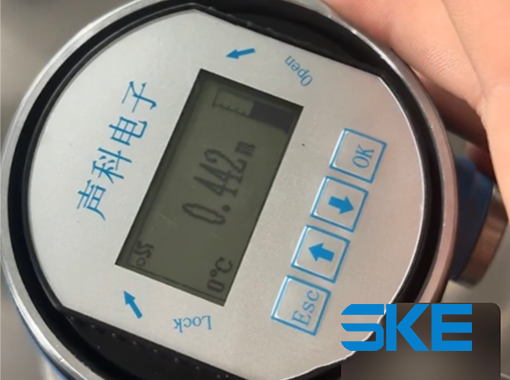
To address this, Shenke Electronics' senior instrumentation engineers have drawn on years of hands-on commissioning and equipment maintenance experience to compile a standardized, field-ready complete wiring guide for 80 GHz radar level transmitters. It covers pre-wiring preparation, step-by-step wiring procedures, wiring methods for different configurations, grounding standards, acceptance testing and commissioning, as well as critical prohibitions. It is compatible with Shenke's full range of 80 GHz high-frequency radar level transmitters and is also applicable to mainstream third-party devices of the same type.
Part One: Pre-Wiring Preparation — Safety and Component Verification (Mandatory)
Industrial instrumentation wiring must follow the principle of safety first, standards before action. All operations must be carried out with the power completely off. Live wiring or live modifications are strictly prohibited, as they risk burning through the instrument mainboard or damaging terminals.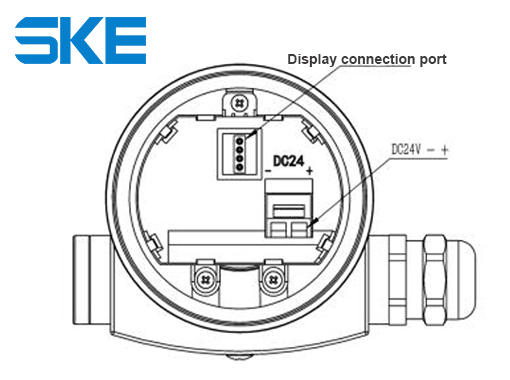
1.1 Safety Condition Verification
De-energize the site and apply lockout/tagout. Confirm the device's power supply circuit is fully de-energized and use a multimeter to verify no residual voltage remains on the line. When working at height or on explosion-proof tanks, wear appropriate personal protective equipment. In explosion-proof environments, strictly follow explosion-proof wiring standards to eliminate all safety hazards.
1.2 Tools and Components Preparation
Prepare the following: a 24 V DC regulated power supply, shielded twisted-pair cable (industrial grade), multimeter, wire crimping tool, insulating tape, waterproof cable glands, yellow-green grounding wire, and terminal ferrules. Cable selection should prioritize 0.75–1.5 mm² shielded twisted-pair wire to meet industrial signal transmission requirements and provide stronger interference resistance.
1.3 Device Visual Inspection
Upon unpacking, inspect the 80 GHz radar level transmitter body for physical integrity. Check that all wiring terminals show no oxidation, deformation, or burn marks, and confirm that the nameplate parameters match the operating conditions. Verify that the instrument uses the industry-standard two-wire 4–20 mA + HART configuration. For customized four-wire models, refer to the dedicated wiring instructions at the end of this guide.
Part Two: Device Structure and Terminal Definitions (Core Knowledge)
The Shenke 80 GHz radar level transmitter features an integrated single-chamber housing design. All wiring is concentrated inside the instrument chamber. Once the top cover is removed and the display module is detached, the standard terminal block is clearly visible, with consistent, clearly labeled terminal markings that eliminate wiring confusion.
General Terminal Definitions: Power/signal common terminal and grounding terminal. Models equipped with RS-485 communication functionality additionally include positive and negative communication terminals. The device natively supports 24 VDC power supply and integrates both 4–20 mA analog signal output and HART protocol communication, with no need for additional converter modules.
Part Three: Standardized Step-by-Step Wiring Procedure (Practical Core)
3.1 Cable Pre-Processing
Strip the outer jacket of the cable, leaving an appropriate length of conductor exposed. Remove the insulation from each conductor core to a length that matches the terminal depth — avoid excessive bare exposure or insufficient contact depth. Crimp dedicated terminal ferrules onto each conductor to ensure a secure connection and prevent loose or false contacts. Reserve the shielding layer for its dedicated grounding terminal; under no circumstances should it be arbitrarily cut or wrapped off.
3.2 Main Wiring Procedure (Two-Wire Configuration — Standard Method)
The two-wire configuration is the most commonly used wiring method for 80 GHz radar level transmitters. Power supply and signal share a single cable pair, resulting in clean routing, low failure rates, and compatibility with the vast majority of industrial PLC and DCS control systems.
Open the waterproof top cover of the instrument and remove the display screen in the direction indicated by the OPEN marking to expose the internal terminal block.
Positive terminal (+): Connect to the positive terminal of the 24 V DC power supply, which simultaneously serves as the 4–20 mA signal input positive for the control system.
Negative terminal (−): Connect to the negative terminal of the 24 V DC power supply, which simultaneously serves as the 4–20 mA signal input negative for the control system.
Insert the ferrule fully into the terminal hole and tighten the fixing screw, ensuring no conductor looseness or exposed bare wire that could cause a short circuit or leakage.
Route the cable through the waterproof cable gland and tighten it appropriately to maintain chamber seal integrity and prevent moisture or dust from entering the device.
3.3 Four-Wire Configuration (Customized Models)
For 80 GHz radar level transmitters used in high-precision or long-distance signal transmission applications, the power supply and signal circuits are independently separated with clearly distinguished wiring:
Power terminals: Connect the 24 VDC positive and negative lines exclusively for powering the device; these terminals play no role in signal transmission.
Signal terminals: Independent 4–20 mA positive and negative lines connected solely to the control system's signal acquisition input.
Communication terminals: On models equipped with RS-485 functionality, connect the communication lines according to the positive/negative terminal markings to enable remote data transmission and parameter configuration.
Part Four: Grounding and Shielding (Critical for Interference Resistance)
The 80 GHz high-frequency radar signal is extremely sensitive to electromagnetic interference. Proper grounding and shielding are essential to prevent data fluctuation and measurement error — and are also the most commonly overlooked aspects of the wiring process.
4.1 Device Grounding Standards
Use a dedicated yellow-green grounding conductor of ≥ 2.5 mm² to reliably connect the instrument's grounding terminal to the site's dedicated grounding grid, with a grounding resistance of ≤ 4 Ω. Sharing a grounding electrode with variable frequency drives, high-power motors, or similar equipment is strictly prohibited, as stray interference will corrupt the radar signal.
4.2 Cable Shielding Procedure
The shielded twisted-pair cable's shielding layer must follow the single-point grounding standard — grounded only at the control cabinet end, with the instrument end left floating and insulated. This eliminates ground loop interference caused by double-end grounding and effectively suppresses electromagnetic and variable-frequency drive interference from the industrial environment, ensuring signal stability.
Part Five: Post-Wiring Inspection and Power-On Acceptance
After wiring is complete, powering on the device immediately is strictly prohibited. A systematic verification must be carried out following Shenke Electronics' standardized acceptance procedure before the device is commissioned, preventing equipment faults at the source.
5.1 Visual and Circuit Inspection
Verify that all terminal connections correspond correctly — no miswiring, missing connections, or reversed polarity. Check that cables are neatly arranged without crossovers, and that terminals show no exposed bare wire or looseness. Confirm that all waterproof cable glands are fully tightened and the chamber seal is intact, meeting on-site dust and waterproofing requirements.
5.2 Electrical Performance Testing
Use a multimeter in continuity mode to confirm no short circuits or open circuits, and verify that resistance readings are within normal range. Confirm that the control system load resistance is ≥ 250 Ω to satisfy the basic requirements of HART protocol communication and ensure proper remote configuration and parameter adjustment functionality.
5.3 Power-On Commissioning and Verification
Gradually apply the 24 V DC power supply and observe that the instrument's power indicator remains steadily lit with no alarm or fault codes. Once the device completes its self-check, read the local display for level data and simultaneously compare it against the 4–20 mA signal received by the control system. Synchronized data with no drift or sudden jumps confirms a successful and compliant wiring installation.
Part Six: Wiring Prohibitions and Common Fault Prevention
Drawing on years of Shenke Electronics after-sales commissioning experience, the following summarizes the most frequently encountered on-site wiring problems and prohibitions to help users avoid common pitfalls:
Never insert or remove terminal connections while the device is live — this can instantly damage the instrument mainboard and cause permanent device failure.
Prohibit loose connections or exposed bare wire — over time, these lead to signal interruption and intermittent equipment faults.
Eliminate improper grounding and haphazard shielding connections — these are the leading cause of level data fluctuation and measurement inaccuracy.
In explosion-proof environments, never modify wiring or compromise the device's explosion-proof sealing structure — doing so voids explosion-proof certification and creates serious safety hazards.
Never use unshielded standard cable for routing — it cannot resist electromagnetic interference in industrial environments and cannot guarantee measurement accuracy.
Part Seven: Summary from Shenke Electronics Engineers
Wiring an 80 GHz radar level transmitter may appear straightforward, but the details ultimately determine device stability and measurement accuracy. The core principles can be summarized as: power off before operating, match terminals correctly, follow shielding standards, meet grounding requirements, and verify each item before commissioning.
Shenke Electronics' full range of 80 GHz radar level transmitters adheres to standardized electrical design with clearly labeled terminals and universally applicable wiring logic. Strictly following the procedures outlined above will minimize equipment failure rates and ensure long-term stable level measurement with accurate data across all types of complex industrial operating conditions.
For wiring challenges in special environments — including high temperature, high pressure, strong interference, or explosion-proof zones — contact the Shenke Electronics technical team at any time for dedicated one-on-one wiring and commissioning guidance.

